
Why Does Nebraska’s Hail History Matter for Omaha Roofs?
The history of hail in Nebraska matters because severe storms have shaped roofing risks across the state for generations. In Omaha, hail can bruise shingles, strip away granules, dent vents, and damage gutters. Even when a roof does not leak right away, hidden hail damage can shorten its life and cause leaks later.
Nebraska Homeowners’ Relationship with Hail
Hail can be one of the hardest threats for an Omaha roof to handle. It can hit shingles, vents, flashing, gutters, and other roof parts in only a few minutes, leaving damage that may not be easy to see from the ground.
That’s why the history of hail in Nebraska matters for homeowners today. Anchor Roofing helps Omaha homeowners understand how hail affects roof systems, when roof repair may be needed, and why inspections are important after strong storms.
The Long History of Severe Hail in Nebraska
Nebraska homeowners have faced severe hailstorms for generations because of the state’s place in the central Plains. Spring and summer storms can build quickly, and strong storm clouds can form hail large enough to damage roofs, siding, and other parts of your property.
Nebraska has even seen record-breaking hail, including the 2003 Aurora hailstone that once held the U.S. diameter record and still stands out for its size.
For homeowners across the state, this history of hail is not just about past weather. It helps explain why roof inspections, repairs, and replacement are so important after hailstorms and to prevent damage to your home.
Why Do Storm and Regular Roof Inspections Matter?
Roof damage is not always easy to spot from the ground, especially after hailstorms or strong winds. In Omaha, where severe weather and hail are common, regular roof inspections play an important role in protecting your home year-round. Storm inspections help identify fresh damage after severe weather, while routine inspections can catch wear and tear before it turns into larger problems.
A professional roof inspection can help identify:
- Shingle damage: Bruises, cracks, lifted edges, or missing granules caused by hail or aging
- Metal damage: Dents on vents, flashing, gutters, and downspouts that often signal hail impact
- Water risks: Weak spots where moisture could enter and lead to leaks
- Storm patterns: Signs of concentrated wind or hail damage across different roof sections
- Repair needs: Whether the roof needs minor repairs or a full replacement
For homeowners in the Omaha area, scheduling a roof inspection after major storms—and as part of regular home maintenance—can help catch problems early, protect the life of the roof, and make the next steps easier to plan.
What Are Some Notable Nebraska Hail Events?
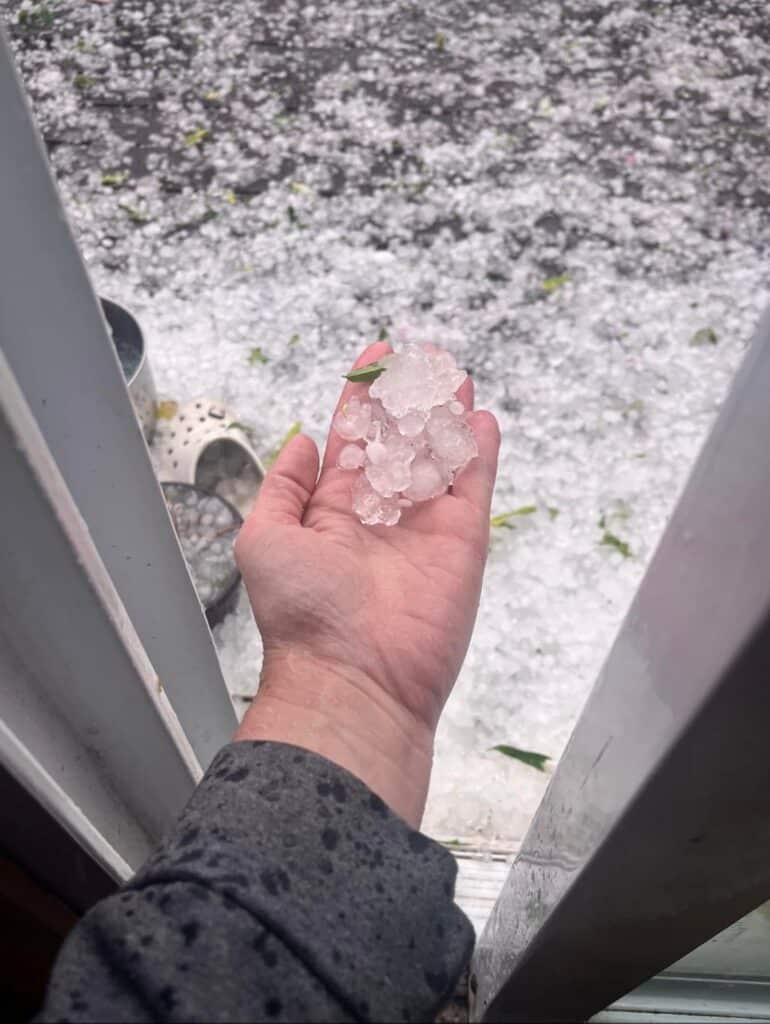
NOAA records show that Nebraska has been part of many costly severe storm events. These storms often bring hail, high winds, and tornadoes together, which can make roof damage more serious.
Some notable Nebraska hail and severe storm events include:
- June 2014: Severe storms brought wind gusts over 90 mph and baseball- to softball-sized hail to central and eastern Nebraska. NOAA reported severe damage to structures and vehicles.
- August 2018: Baseball- to softball-sized hail affected parts of Colorado, Nebraska, and Wyoming, with the most costly impacts in eastern Colorado. This event showed how large hail outbreaks can affect several Plains states during the same storm system.
- July 2021: Severe storms caused major hail damage across several central states, including Nebraska. NOAA also reported widespread wind damage to homes, vehicles, and businesses in nearby areas.
- June 2022: Damaging hail, high winds, and more than two dozen tornadoes affected several states, including Nebraska. Hail and wind damage were severe across much of the state.
- April 2023: Severe hail and high winds affected Nebraska, Kansas, Iowa, Missouri, and other nearby states. Homes, vehicles, businesses, and agriculture all saw damage.
These events show why hail is not a rare roofing concern in Nebraska. It is a repeated weather threat that homeowners should take seriously.
What Is Common Hail Damage Found on Nebraska Roofs?
Hail damage can affect more than the top layer of a roof. Some damage is easy to spot, but other problems may stay hidden until shingles weaken or water gets inside. Common signs of hail damage include:
- Missing granules: Hail can knock away the rough surface that protects asphalt shingles.
- Bruised shingles: A shingle may feel soft or look dark where hail struck it.
- Cracked shingles: Larger hail can split or break shingles, especially on older roofs.
- Dented vents and flashing: Metal roof parts can show dents after a strong hailstorm.
- Damaged gutters: Gutters and downspouts may dent, bend, or pull loose during severe weather.
Granule loss is one of the most important problems to catch early. Once those granules are gone, the asphalt layer underneath has less protection from sunlight, rain, and daily wear. That can make shingles break down faster, even if the roof does not leak right after the storm.
All of these problems can shorten the life of a roof if they are ignored. A roof inspection can help find damage before it turns into leaks or larger repair needs.
How Do Modern Shingles Handle Hail?
Modern shingles are made to handle the weather better than many older asphalt shingles. Many newer shingles have stronger layers, better sealing strips, and improved designs that help them resist wind, rain, and some hail damage.
Impact-resistant shingles can offer more protection during hailstorms, as they are tested to handle harder hits than standard shingles, which can help reduce cracks, bruising, and granule loss.
This can be especially helpful in Nebraska, where hail size and wind speed can change quickly during a storm. Still, no shingle is completely hail-proof. Large hail, strong winds, and repeated storms can damage even newer shingles, which is why Nebraska homeowners should still check for damage or contact a roofing company for an inspection after severe weather.

FAQs About Hail and Its Impact on Nebraska Roofing
How Does Hail Damage Asphalt Shingles?
Hail can damage asphalt shingles by knocking away the protective granules on the surface. It can also bruise, crack, or weaken the shingle underneath. This damage may not cause a leak right away, but it can make the roof age faster and leave it more open to water damage during future storms.
Why Is Nebraska Known for Severe Hailstorms?
Nebraska is known for severe hailstorms because it sits in the central Plains, where strong spring and summer storms often form. Warm air, changing winds, and powerful storm clouds can create hail before the storm moves across the state. This makes hail a regular concern for Nebraska homeowners, especially when storms bring large hail and high winds.
How Soon Should I Inspect My Roof After a Hailstorm?
Homeowners should schedule a roof inspection as soon as it is safe after a hailstorm. Damage can be hard to see from the ground, especially if shingles are bruised or granules have been knocked loose. A timely inspection can help find problems early, document damage, and prevent small issues from turning into leaks or larger repairs.
Protect Your Roof After Nebraska Hailstorms
Nebraska’s history of hail shows why roof care matters for homeowners today. Even one strong storm can damage shingles, vents, gutters, and flashing, while smaller hail can wear down a roof over time.
Regular inspections can help find damage before it turns into leaks or larger repair needs. They can also give homeowners a clearer idea of whether roof repair, storm damage repair, or new shingles may be needed.
If your home was hit by hail, Anchor Roofing can inspect your roof and explain the next steps. To learn more about the team, services, and local roofing experience, contact Anchor Roofing today.
DISCLAIMER: Anchor Roofing is not an insurance adjuster, nor acting as a public adjuster, and does not approve, deny, or decide insurance claims.