
How Can I Winterize My Siding in Omaha?
To winterize siding in Omaha, homeowners should inspect for damage, seal gaps, clean siding panels, clear gutters, and reinforce vulnerable areas before temperatures drop. With Omaha’s early snow, freeze-thaw cycles, and strong winter winds, waiting too long can lead to water intrusion, higher energy bills, and avoidable repairs.
Preparing your siding in late fall, ideally before the first hard freeze or a drop in November temperatures, helps protect your home from moisture damage, warping, and drafts. As Omaha’s trusted exterior specialists, Anchor Roofing helps families across Dundee, Benson, Millard, West Omaha, and Elkhorn protect their homes through proactive winter prep and dependable local service.
Key Takeaways About Winterizing Siding to Prevent Damage
- Inspect siding for cracks, loose panels, or warping
- Seal joints and gaps before moisture freezes
- Clean siding to prevent mold and trapped moisture
- Clear gutters to avoid overflow and ice buildup
- Improve energy efficiency before the winter cold arrives
Why Siding Needs Winter Prep in Omaha
Omaha winters are harsh on exterior materials. Rapid temperature swings cause siding to expand and contract, which can loosen panels and open small gaps. When snow melts during the day and refreezes overnight, water can work its way behind siding and freeze again, worsening damage.
High northwest winds and wind-driven rain make matters worse, especially in exposed neighborhoods like Elkhorn and West Omaha. Cold snaps also push pests to seek warmth indoors through unsealed gaps. In Omaha, we often see siding damage appear after early-season ice storms or late-fall hail events, making proactive prep essential.
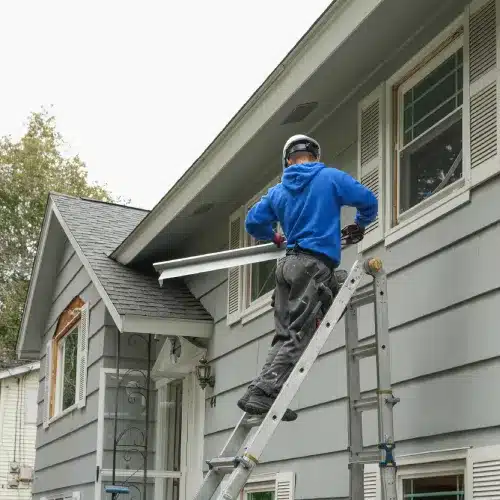
Step-by-Step Siding Winterization Checklist
Inspect for Cracks, Warps, and Loose Panels
Walk around your home and look closely for cracked, warped, or missing siding pieces. Even minor issues can worsen during freeze-thaw cycles.
Re-Caulk Gaps Around Windows and Doors
Old or cracked caulk lets cold air and moisture in. Resealing before freezing temperatures helps reduce drafts and water intrusion.
Clear Gutters and Downspouts Before the First Freeze
Clogged gutters cause water to overflow behind siding, leading to rot and ice damage. Keeping them clear also helps reduce ice dams.
Trim Trees and Bushes Near the Home
Branches rubbing against siding can loosen panels and trap moisture. Trimming back landscaping helps prevent damage during winter winds.
Clean the Siding
Dirt and algae hold moisture against siding surfaces. A gentle fall cleaning allows siding to dry thoroughly before winter sets in.
Seal or Paint Any Exposed Wood
Homes in older neighborhoods like Dundee and Benson often have aging wood siding or trim. Sealing exposed areas helps prevent swelling and rot.
Check Attic Ventilation to Reduce Ice Dams
Poor ventilation contributes to ice dams, which can force water behind siding and trim. According to the U.S. Department of Energy, proper attic airflow helps regulate roof temperatures and reduce moisture problems.
Material-Specific Winter Tips
- Vinyl siding: Watch for brittle sections that crack in freezing temperatures
- Fiber cement: Inspect failing caulk around trim and seams
- Engineered wood/LP® SmartSide®: Check for moisture absorption or early swelling
Common Winter Siding Issues We See in Omaha
After early-December ice storms, we frequently see damage in Millard and West Omaha, where wind exposure and older installations combine:
- Panels loosening during high winter winds
- Water is getting behind poorly sealed siding
- Mold growth on north-facing walls with limited sun exposure
- Warping caused by repeated freeze-thaw cycles
If winter storms have already caused damage, professional storm damage repair may be needed. Anchor Roofing is not an insurance adjuster, but we can help document visible exterior damage for your claim.
Bonus Energy-Saving Tip: Add Insulation or House Wrap
If you’re already planning a siding update, adding insulation or house wrap can significantly improve winter comfort. These upgrades increase R-value, reduce drafts, and help lower heating bills during Nebraska’s long winters.
The Environmental Protection Agency notes that sealing and insulating the building envelope can cut heating and cooling costs by up to 20%. Learn more about how siding impacts comfort and efficiency with our siding installation and replacement services.
Let Our Omaha Team Help You Get Winter-Ready
Winter prep is easier with experienced local professionals who understand Omaha’s weather patterns and housing styles. Our experienced team at Anchor Roofing is known for being highly communicative, detail-oriented, and respectful of your home, providing a white-glove experience from inspection to follow-up.
FAQs About Winterizing Siding in Omaha
How Do You Winterize Vinyl Siding?
Winterizing vinyl siding starts with a complete visual inspection to identify cracked, loose, or brittle panels that can worsen in freezing temperatures. Homeowners should reseal gaps around trim and fixtures, clean dirt that traps moisture, and ensure gutters are clear so melting snow drains away from the siding.
What Siding Problems Are Most Common in Omaha Winters?
In Omaha, the most common winter siding problems include loose panels caused by high winds, moisture getting behind poorly sealed seams, and mold growth on shaded or north-facing walls. Repeated freeze-thaw cycles can also cause warping or expansion damage, especially on older homes in neighborhoods like Benson or Dundee.
Should I Seal Siding Cracks Before Snow and Freezing Temperatures?
Yes, sealing siding cracks before snow and freezing temperatures is one of the most critical steps in winter preparation. When water enters small gaps and freezes, it expands and can push the siding farther apart, causing more extensive damage. Proper sealing helps keep moisture out, improves energy efficiency, and reduces the risk of mid-winter repairs.
Can Winter Damage Increase Heating Costs?
Winter siding damage can significantly increase heating costs by allowing cold air to seep into the home. Even small gaps or loose panels force your HVAC system to work harder to maintain a consistent indoor temperature.
When Is the Best Time to Winterize Siding in Omaha?
The best time to winterize siding in Omaha is during late October or November, before the first hard freeze and before heavy winter winds arrive. Completing inspections and repairs early ensures materials can cure properly and prevents weather-related delays.
Get Your Siding Ready Before Winter Hits Omaha
Cold weather can expose minor siding issues that turn into costly repairs once snow and ice set in. A professional inspection helps catch problems early and gives you peace of mind heading into winter.
Contact us online to schedule your winter siding inspection in Omaha with Anchor Roofing and get expert guidance from a local team that understands Nebraska weather, home styles, and seasonal risks.