
Can Regular Roof Maintenance Prevent Emergency Repairs?
Regular maintenance can uncover blocked drains, loose materials, damaged flashing, and other concerns before they cause a serious leak. Severe storms can still damage a roof without warning, but scheduled inspections and timely repairs reduce the risk of emergencies and help property managers avoid larger, more expensive problems.
A strong property management roofing plan replaces last-minute decisions with regular inspections, quick repairs, and long-term planning. Anchor Roofing helps property managers in the Omaha area find damage early and decide whether they need roof repairs, maintenance, or replacement. This proactive approach protects the property while reducing disruptions for tenants and owners.
Roofing emergencies often begin as small problems that go unnoticed. A loose seam, blocked drain, or minor puncture can allow water into the building, damage tenant spaces, and create an expense that was never included in the property budget.
Should I Create a Regular Roof Inspection Schedule?
Roof damage is not always visible from the ground. A set inspection schedule can uncover worn materials, weak seals, and drainage problems before water enters the building.
Schedule Inspections Twice a Year
Commercial roofs should generally be inspected in the spring and fall. Spring inspections can reveal winter damage, while fall inspections help prepare the roof for snow, ice, and freezing temperatures.
A professional should check the roofing surface, flashing, seams, drains, gutters, vents, and areas around rooftop equipment.
Inspect the Roof After Severe Weather
Knowing when to perform maintenance on a commercial roof can prevent emergency repairs in the long term. Property managers should always arrange an inspection after hail, strong winds, or heavy rain. Storm damage may not cause an immediate leak, but it can leave weak areas that fail during the next storm. In fact, the National Oceanic and Atmospheric Administration reported severe storms caused over $20 billion in property damage in 2024.
What Are the Early Warning Signs of Roof Damage?
Property managers and maintenance teams should watch for changes inside and outside the building. Common signs of roof trouble include:
- Water stains or damp areas that may point to an active or recent leak.
- Loose, cracked, or missing materials that leave lower layers exposed.
- Standing water that remains on a flat roof after a storm.
- Damaged flashing around vents, walls, equipment, or roof edges.
- Clogged gutters and drains that prevent water from leaving the roof.
- Mold or musty odors near ceilings or upper walls.
Tenants and workers should know how to report these warning signs. Managers should review each report promptly so a small problem does not have time to spread.
Should Small Roof Repairs Be a Priority?
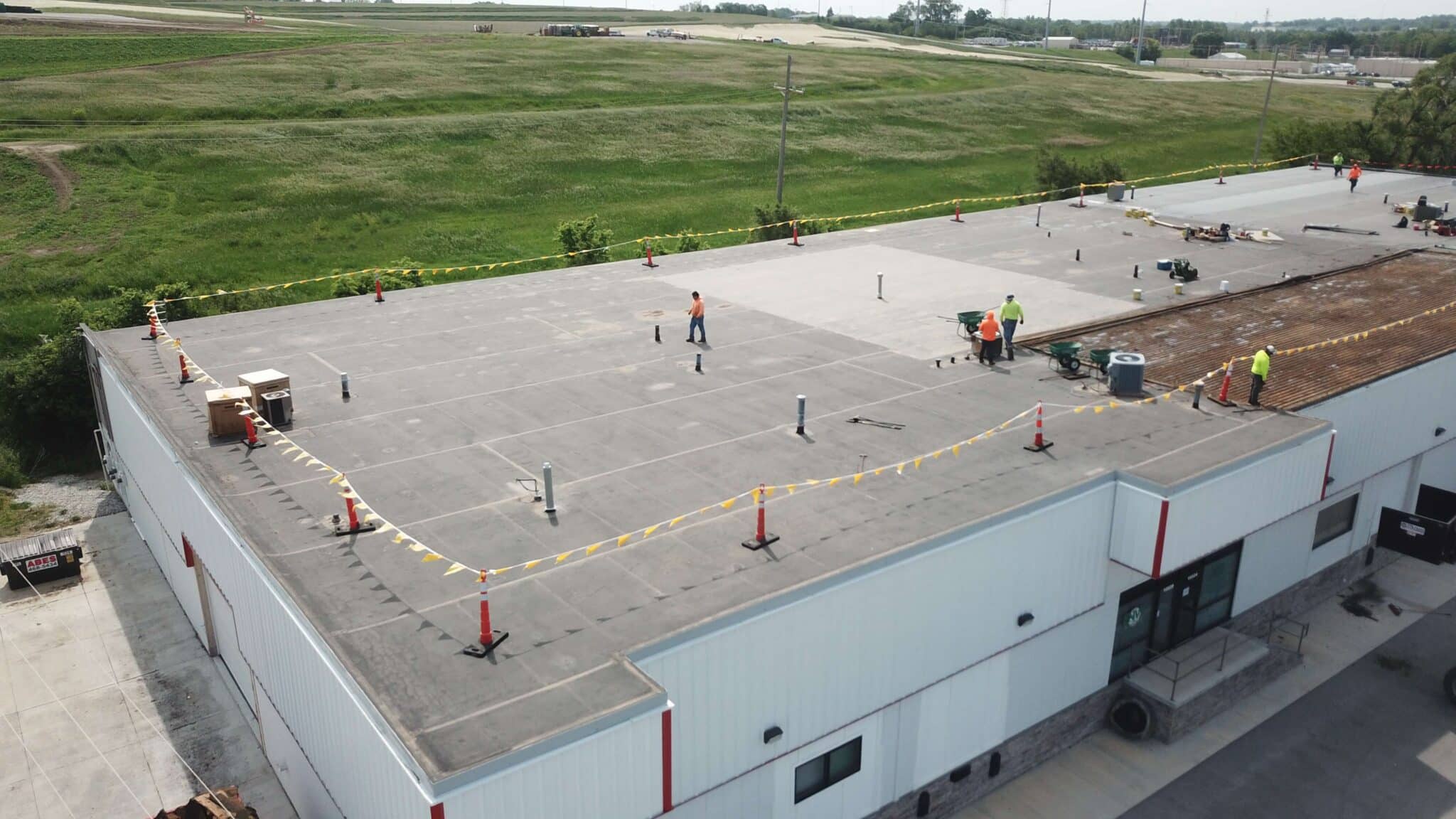
A loose seam, cracked flashing, or small puncture may not seem urgent if the roof is not leaking. However, wind, rain, sunlight, and changing temperatures can make the damage worse.
Once water gets below the surface, it can damage insulation, decking, ceilings, and walls. Wet insulation may also make it harder to control the building’s temperature.
Property managers should set clear timelines for approving repairs. Record the location, date, photographs, and work completed so it is easier to spot problems that keep returning.
Keep Gutters, Drains, and Roof Surfaces Clear
Leaves, branches, dirt, and trash can block the path that water should follow. Gutters, downspouts, drains, and scuppers should be cleaned regularly, especially after storms and during the fall.
Blocked drainage can cause water to collect on a flat roof or spill down the sides of a building. Standing water adds weight to the roof and may enter through weak seams or flashing.
Trapped water can also freeze and expand during cold weather. Routine cleaning reduces the risk of leaks, ice buildup, and damage to roofing materials.
Should Roofing Costs Be Built Into the Property Budget?
Planned roof expenses are easier to manage than sudden emergency costs. Every property budget should cover routine care while preparing for larger projects.
Set Aside Money for Maintenance and Repairs
The yearly budget should include inspections, cleaning, preventive maintenance, and minor repairs. An emergency reserve can help cover damage from hail, wind, and fallen branches.
Past invoices provide a useful starting point for estimating costs. This amount may need to increase as the roof gets older or requires more repairs.
How Should I Plan Ahead for Roof Replacement?
Track each roof’s age, material, condition, warranty, and repair history. These details can help property managers estimate when replacement may be needed.
Planning several years ahead gives property owners time to arrange funding and compare roofing options. It also reduces the risk of repeated leaks forcing an urgent replacement.
How to Create a Roofing Emergency Response Plan
Even a well-maintained roof can suffer sudden storm damage. A written response plan helps staff protect tenants and limit damage while professional help is on the way. The plan should include:
- Contact information for a trusted roofing contractor
- Steps for moving people and valuable items away from the area
- Locations of electrical panels and emergency supplies
- Instructions for photographing and recording the damage
- Copies of insurance information and roofing warranties
Staff should know where to find the plan and who can approve emergency work. Make sure to review the plan each year so all contact details and procedures remain current.
Work With a Reliable Local Roofing Contractor
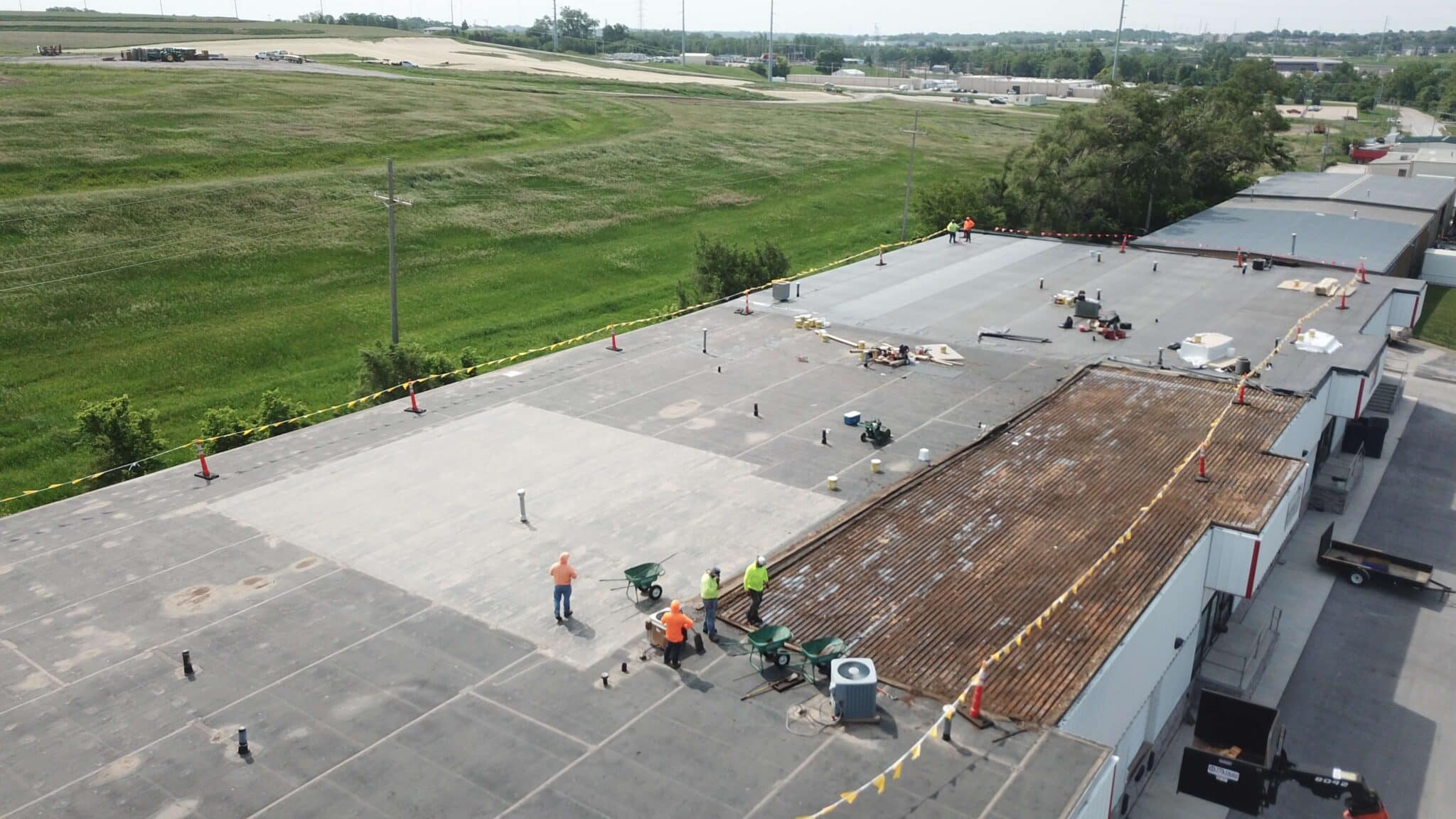
Property managers should choose a roofing contractor before an emergency happens. A contractor familiar with the property can monitor changes, review past repairs, and better understand the roof’s condition.
Look for a licensed and insured company that provides photographs and clear written recommendations. Local experience also matters because Nebraska’s hail, wind, snow, and temperature changes can affect roofing systems in different ways.
The Anchor Roofing team provides commercial roof inspections, maintenance, repairs, and replacements in Omaha and nearby communities. We can recommend services based on each property’s roof, needs, and budget.
FAQs About Commercial Roofing
How Often Should a Property Manager Schedule a Roof Inspection?
Most commercial roofs should be professionally inspected twice a year, usually in spring and fall. Property managers should also arrange an inspection after hail, strong winds, heavy rain, or falling debris. Extra inspections may also be needed when tenants report leaks, water stains, musty odors, or other signs that water has entered the building through a damaged area of roofing.
What Is Considered a Roofing Emergency?
A roofing emergency is damage that creates an immediate risk to people, tenants, equipment, or the building. Examples include an active leak, a fallen tree, major storm damage, loose materials, or a part of the roof beginning to collapse. Property managers should keep people away and contact a roofing contractor as quickly as possible to limit further damage and safety risks.
How Can Property Managers Budget for a Roof Replacement?
Property managers can budget for a roof replacement by tracking its age, material, condition, warranty, and repair history. Regular inspection reports can help estimate how much useful life remains. This gives owners time to compare options, collect estimates, and build the expected cost into future budgets instead of funding an unplanned emergency project after the roof begins to fail unexpectedly.
Stay Ahead of Roofing Emergencies
Roofing emergencies can lead to water damage, tenant complaints, interrupted operations, and unexpected costs. Regular inspections, prompt repairs, clear maintenance plans, and careful budgeting give property managers more control over these risks. A proactive property management roofing plan can also help extend the roof’s life and make future expenses easier to predict.
The team at Anchor Roofing helps property managers maintain commercial roofs throughout Omaha and the surrounding communities. Whether your property needs an inspection, preventive maintenance, storm damage repairs, or a complete replacement, our team can help you choose the right next step. Contact Anchor Roofing today to schedule a free commercial roof inspection.