
Which Is Better: EPDM or TPO Commercial Roofing?
EPDM lasts longer and handles temperature swings better, while TPO offers stronger seams and better energy efficiency. The right choice depends on your building, climate, and budget.
What Do EPDM and TPO Stand For?
The terms “EPDM” and “TPO” both refer to the names of roofing materials. EPDM stands for ethylene propylene diene monomer, and TPO stands for thermoplastic polyolefin.
How to Decide Between EPDM and TPO
Commercial property managers and business owners have many flat roof options. Among single-ply membranes, EPDM and TPO are two of the most popular—but each comes with distinct advantages. Choosing the right material depends on your building’s design, climate, and long-term maintenance goals.
At Anchor Roofing, our commercial roofing experts in Omaha have installed, repaired, and maintained both EPDM and TPO commercial roofing systems for years. Discover the key differences to help you make an informed decision for your property.
Resistance to Damage: EPDM vs. TPO
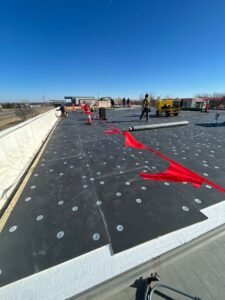
Both EPDM and TPO are single-ply membranes installed in large sheets, providing reliable protection against hail, UV exposure, and fire. Understanding how each handles common commercial roof hazards is essential.
- EPDM: Flexible and resilient, EPDM is especially resistant to extreme temperature fluctuations. Its adhesive and mechanically fastened seams are strong, though not completely waterproof. Minor punctures or tears can be patched with specialized products.
- TPO: TPO’s heat-welded seams create a stronger, water-tight bond, improving resistance to leaks. It also has superior chemical resistance, which makes it ideal for industrial buildings exposed to oils, solvents, or other chemicals.
When comparing EPDM vs. TPO commercial roofing, consider your building’s exposure to moisture, chemicals, and foot traffic. TPO can outperform in high-risk environments, while EPDM excels in temperature variability.
Longevity: Which Roof Lasts Longer?
One of the most important considerations for any commercial property is roof lifespan. EPDM generally outlasts TPO, but both require proper maintenance to maximize longevity.
- TPO typically lasts 20 to 30 years, depending on climate and installation quality. Exposure to UV rays and extreme heat can shorten its life if reflective coatings are not maintained.
- EPDM can last 30 to 40 years or more. Its flexibility allows it to expand and contract without cracking, making it particularly resilient in climates with wide temperature swings.
Regular inspections, cleaning, and minor repairs are critical for both roof types. In the EPDM vs. TPO commercial roofing face-off, EPDM’s longevity makes it ideal for property owners seeking a long-term investment with minimal replacements, while TPO may offer savings in energy efficiency over its shorter lifespan.
Which Has Better Energy Efficiency: EPDM Vs. TPO
Energy efficiency is a growing priority for commercial buildings. Roof color, reflectivity, and insulation directly affect heating and cooling costs.
- TPO is naturally white, highly reflective, and designed to reflect sunlight. TPO reduces cooling costs and helps commercial buildings meet sustainability standards. Its energy-saving properties are a major reason it has grown in popularity over the last decade.
- EPDM is typically black, which absorbs heat. Reflective coatings can be applied, but these increase both installation costs and maintenance needs.
Buildings in warmer climates or with large roof surfaces may find TPO’s reflective properties advantageous. EPDM can also be energy-efficient with the right coatings, but this adds a layer of consideration when budgeting. Anchor Roofing can help you decide which is right for your next commercial roofing project.
Is Installation and Maintenance Cost-Effective?
Cost is always a factor in commercial roof replacement decisions. Both EPDM and TPO are affordable single-ply systems, but installation methods create differences in labor and material costs.
- EPDM is easier and faster to install with adhesives or mechanical fasteners. This can reduce labor costs, making EPDM generally more cost-effective upfront.
- TPO has heat-welded seams that take additional time and require skilled labor. While the material cost may be similar, installation is slightly more expensive.
Maintenance should also factor into the cost equation. In the EPDM vs. TPO commercial roofing choice, you’ll find that TPO may require periodic seam inspections, especially in harsh climates, while EPDM benefits from fewer seam issues over time. This can potentially lower long-term maintenance costs.
For more on flat roofing durability, the National Roofing Contractors Association (NRCA) has a comprehensive overview.

Carlisle: Trusted Manufacturer for EPDM and TPO
The manufacturer of your roofing material is just as critical as the type of membrane. Anchor Roofing uses Carlisle products, a leading manufacturer of commercial single-ply membranes with over 50 years of industry experience.
Carlisle’s EPDM and TPO systems are engineered for durability, energy efficiency, and ease of installation, providing reliable protection against UV exposure, hail, and extreme temperatures.
Their products undergo rigorous testing for puncture resistance, chemical exposure, and weather performance, giving building owners confidence that their roof will perform as promised.
By choosing Carlisle, property managers also gain access to comprehensive warranties and technical support, helping ensure long-term peace of mind. Paired with Anchor Roofing’s expert installation, Carlisle membranes deliver low-maintenance, long-lasting performance, making them a smart investment for any commercial roofing project.
FAQs About EPDM vs. TPO Commercial Roofing
Can EPDM or TPO Roofs be Repaired Easily if Damaged?
EPDM repairs typically involve patching or adhesive applications, while TPO repairs require heat-welding patches. Both systems are repairable, but regular maintenance ensures a longer lifespan.
Are EPDM or TPO Roofs Environmentally Friendly?
Both TPO and EPDM can be implemented with environmental considerations in mind. TPO is fully recyclable and reflects sunlight, reducing energy use. EPDM can also be coated for reflectivity, and many EPDM products include recycled materials.
Which Roof Performs Better in Extreme Weather?
Omaha weather can be unpredictable. EPDM is highly flexible and handles temperature swings well. TPO resists punctures and water infiltration better, making it ideal for areas prone to heavy rainfall or chemical exposure.
How Do I Choose Between EPDM vs. TPO for My Commercial Roofing?
When deciding which material to use for your commercial building, you should consider roof lifespan, climate, energy efficiency, and budget. Anchor Roofing can assess your building and recommend the right solution for your specific needs.
Your Commercial Roofing Partner in Omaha
Selecting the right contractor is just as important as choosing the right material. At Anchor Roofing, our team has extensive experience using both EPDM and TPO systems in commercial roofing projects.
We help building owners evaluate:
- Roof slope and structure
- Environmental and chemical exposures
- Energy efficiency goals
- Budget and long-term maintenance considerations
With professional guidance, you can determine which system provides the right balance of durability, cost, and energy efficiency for your commercial property. Contact us today to discuss your commercial roofing project.