
Is Commercial Roof Coating a Better Investment Than Replacement?
In many cases, yes. A coating may be the better investment when the existing roof is still structurally sound but has surface wear, small leaks, weather damage, or other problems that can be repaired before coating.
Commercial roof coating benefits include the addition of a protective layer over the existing roof. Anchor Roofing explains that sealcoating can help prevent moisture intrusion, extend roof life, improve protection from weather, and reduce costs compared with replacement.
When Does a Roof Coating Make Financial Sense?
For a commercial property owner, a roof replacement can be one of the largest building expenses. But replacement is not always the best answer when an aging roof starts to show wear.
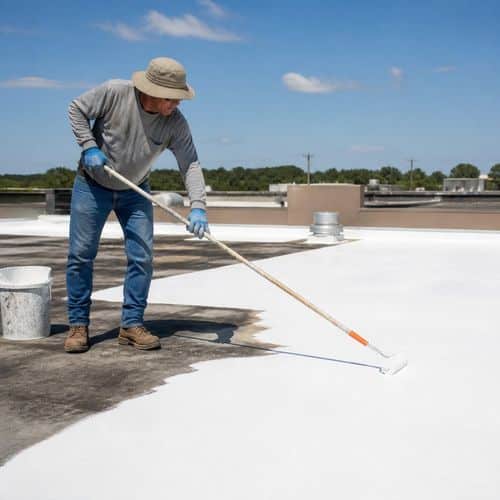
A commercial roof coating can restore and protect an existing roof without the cost and disruption of a full tear-off. The key is knowing when your roof is a good candidate and when replacement makes more financial sense.
A coating is worth considering when:
- The roof is structurally sound. A coating cannot fix major structural failure.
- The roof has manageable damage. Cracks, seams, and small problem areas can often be repaired before coating.
- You want to avoid a tear-off. Keeping the existing roof in place can reduce labor, waste, and disruption.
- You want to extend roof life. Anchor Roofing states that many commercial coatings last about 10 to 15 years, depending on the product, roof condition, and maintenance.
- You want better energy performance. Reflective coatings can help reduce heat absorption and cooling costs during hot weather.
The best choice depends on the roof’s current condition, not simply its age. A professional inspection should come before any decision.
How Do Maintenance and Coating Affect Your Roof’s Long-Term ROI?
Roofing costs are not limited to the price of materials and labor. Leaks, emergency repairs, damaged equipment, business interruptions, and premature replacement can all reduce your return on the roof investment.
Anchor Roofing’s guide on commercial roof maintenance vs. emergency repair explains why planned maintenance can cost less than reacting to major roof failures. Preventive inspections and small repairs help catch problems before they become expensive emergencies.
Can a Coating Lower Lifetime Roofing Costs?
It can, when the existing roof is a good candidate. Instead of paying for a complete replacement right away, a property owner may repair the existing roof, apply a coating, and continue maintaining the system.
This creates a more predictable path for managing a major building asset. Lower upfront costs plus added service life can improve ROI, especially when replacement can safely be delayed.
What Costs Should You Compare?
Look beyond the initial quote and compare the total value of each option:
- Coating: Repairs, surface preparation, coating materials, labor, inspections, and future maintenance.
- Replacement: Tear-off, disposal, new materials, installation, labor, and possible business disruption.
- Downtime: Consider how each project could affect tenants, employees, customers, equipment, and daily operations.
- Future costs: Factor in expected repairs, maintenance, energy use, and remaining roof life.
A lower project price does not automatically mean a better investment. The right option is the one that provides reliable protection and useful roof life for the money spent.
How Can Anchor Roofing Help You Choose Between Coating and Replacement?
Choosing between restoration and replacement requires an honest look at the roof, the building, and your long-term plans. Anchor Roofing has been building and restoring roofs since 2001 and was officially established in 2019.
You can learn about our team and see how Anchor Roofing approaches commercial roofing projects. The company focuses on clear communication and helping customers understand their options before making a major roofing decision.
What Should a Commercial Roof Inspection Check?
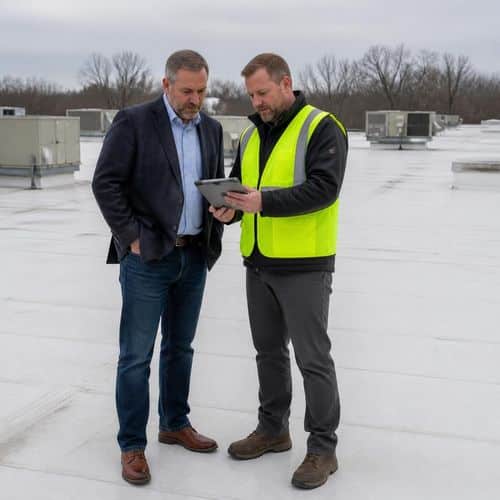
A useful inspection should look at:
- Structural condition: Is the roof stable enough for restoration?
- Water intrusion: Are leaks or moisture problems present?
- Surface condition: Are cracks, seams, blisters, or worn areas repairable?
- Drainage: Is standing water creating ongoing risk?
- Existing materials: Is the current roof compatible with a coating?
- Remaining service life: Would restoration provide enough added value?
- Business needs: Can the property benefit from avoiding a full replacement now?
Not every commercial roof can be coated. Anchor Roofing notes that most candidates are flat or low-slope roofs in relatively good condition without major structural damage.
What Are the Main Commercial Roof Coating Benefits?
The strongest benefits come from extending the useful life of a roof that does not yet require complete replacement.
A coating can create a watertight protective layer, improve resistance to UV exposure and weather, and help protect against moisture and drainage problems. Reflective coatings may also reduce heat absorption and cooling costs.
How Long Can a Commercial Roof Coating Last?
Anchor Roofing states that commercial roof coatings typically last 10 to 15 years, depending on the coating, existing roof condition, and maintenance. Some coatings can also be reapplied when their service life ends, allowing a suitable roof to remain in service longer.
That does not mean every roof will gain the same amount of life. The roof must first be inspected, repaired as needed, properly prepared, and matched with the right coating system.
How Does Hail Affect a Coated Commercial Roof?
Hailstorms can damage any commercial roof, including coated systems. A coating adds protection but does not make a roof hail-proof. After a severe storm, inspect the roof for punctures, cracks, dents, or exposed areas. Prompt repairs can help prevent water intrusion and preserve the coating’s protective performance.
When Is Replacement the Better Choice?
Replacement is generally the better investment when the existing roof has major structural damage, widespread deterioration, or problems that a coating cannot reasonably correct.
A coating should not be used to cover up a failing roof. If the roof cannot provide a sound base, spending money on restoration may only delay the larger expense.
How Can You Decide Whether Coating or Replacement Is Right for Your Building?
Start with an inspection instead of choosing based on price alone. Ask the roofing contractor to explain the current condition of the roof, the repairs needed, the expected service life of each option, and the total cost over time.
A simple decision framework can help:
- Inspect the existing roof.
- Identify structural or widespread damage.
- Repair issues that can be corrected.
- Compare coating and replacement costs.
- Estimate the added service life.
- Consider energy savings and business disruption.
- Choose the option with the strongest long-term value.
For many commercial properties, the goal is not simply to spend less today. It is to protect the building while getting the most useful life from every roofing dollar.
FAQs About Commercial Roof Coating:
Is Commercial Roof Coating Cheaper Than Replacement?
Usually, yes. A commercial roof coating generally costs significantly less than a full replacement because it works with the existing roof rather than requiring a complete tear-off. The exact price depends on roof size, condition, repairs, preparation, and the coating system selected.
How Long Does a Commercial Roof Coating Last?
A commercial roof coating typically lasts about 10 to 15 years, according to Anchor Roofing. Its actual service life depends on the coating type, existing roof condition, installation quality, weather exposure, and ongoing maintenance.
Can a Roof Be Coated if It Has Leaks?
Small leaks and damaged areas may be repaired before coating, but a coating is not a cure for major roof failure. The existing roof must provide a sound base, so a professional inspection should determine whether repairs and coating are practical.
Does Roof Coating Improve Energy Efficiency?
Some coatings can improve energy performance by reflecting more sunlight and reducing roof surface temperatures. This may lower cooling demand during hot weather, although actual savings vary based on the building, roof, climate, insulation, and coating system.
When Should a Commercial Roof Be Replaced Instead?
Replacement is usually the better option when a roof has major structural damage, widespread deterioration, or conditions that cannot be corrected through repairs and coating. A professional inspection can help determine whether restoration provides enough remaining value or replacement is the smarter long-term choice.
Can a Roof Coating Be Applied Over an Existing Commercial Roof?
Yes, in many cases. A commercial roof coating can be applied over an existing roof when the surface is structurally sound and properly prepared. Repairs, cleaning, and surface preparation must be completed first to help ensure the coating adheres properly and provides lasting protection.
Ready to Compare Your Commercial Roofing Options?
Do not assume your aging commercial roof needs a full replacement. Anchor Roofing can inspect your roof, explain the available options, and help you compare restoration and replacement based on cost, roof life, and long-term value.
Contact Anchor Roofing today to find out how we can help you prepare your roof and your business for everything that comes your way.